Blood Pressure Over 140/90? Your Monitor May Be Missing the Most Important Part

Leading Functional Cardiologist Explains Why the Number on Your Screen May Tell Only Part of the Story About What’s Really Happening Inside Your Arteries
There are few moments more frustrating for someone concerned about their cardiovascular health than watching a blood pressure cuff inflate…
waiting…
and seeing those numbers appear again.
140/90.
148/92.
Maybe you've cut back on salt.
Maybe you're exercising more.
Maybe you're already taking medication and checking your blood pressure every morning exactly like you were told.
So naturally, all of your attention goes to one thing:
The number on the screen.
My name is Dr. Rebecca Holt, and I'm a functional medicine cardiologist with over 10 years of clinical experience working with patients concerned about their cardiovascular health.
And one of the most important distinctions I explain to patients is surprisingly simple:
Your blood pressure monitor can tell you what your pressure is.
It cannot show you everything happening inside your arteries.
Think about that for a moment.
We have become extremely good at measuring cardiovascular health through numbers.
Blood pressure.
LDL.
Triglycerides.
HDL.
We measure them, track them, compare them to the previous appointment, and naturally assume that changing the number means we've understood the entire problem.
But a measurement and a mechanism are two very different things.
And once I began looking beyond the numbers, one process kept showing up in cardiovascular research that completely changed how I explained arterial health to my patients.
What Your Blood Pressure Cuff Can't See

To understand it, we need to talk about another number almost every cardiovascular patient knows:
LDL cholesterol.
For decades, the conversation around LDL has been dominated by quantity.
How high is it?
How do we lower it?
How quickly can we get the number on the lab report into range?
But there's another question that matters:
What's happening to those LDL particles while they're traveling through your bloodstream?
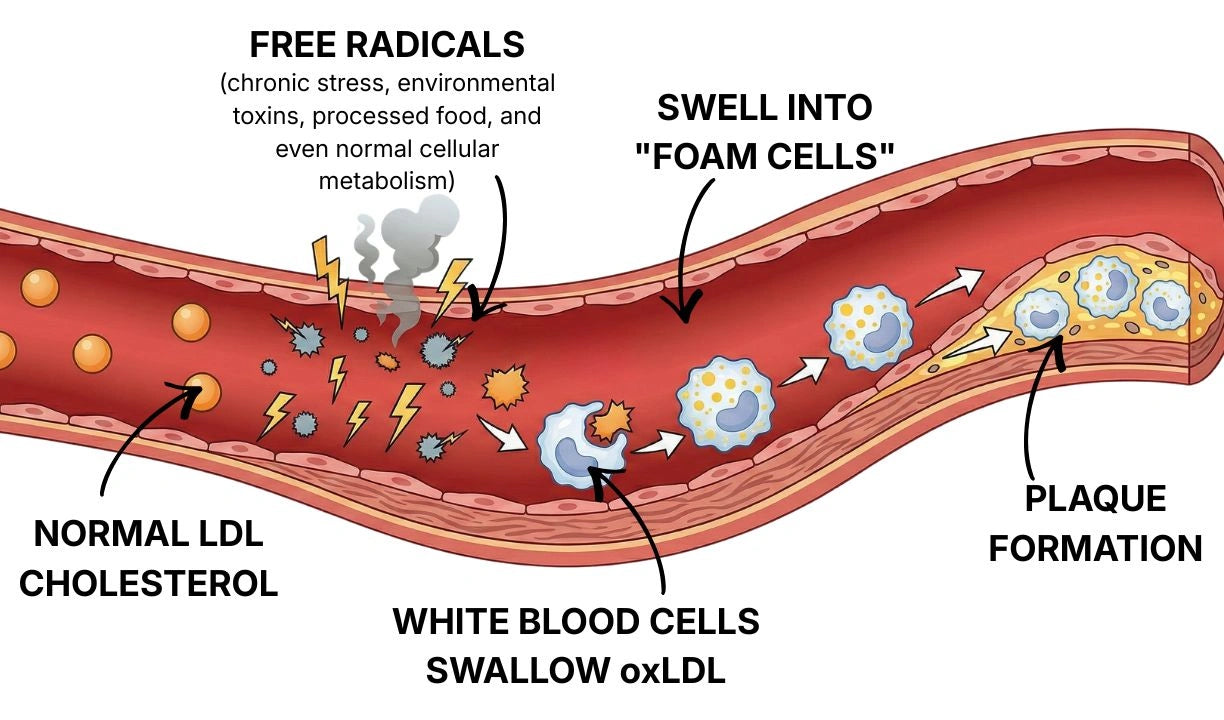
Because LDL particles can undergo a chemical process known as oxidation.
And when they do, the way your body responds to those particles changes dramatically.
This is something your blood pressure monitor can never show you.
Yet it's an important part of understanding what's happening inside the arterial environment itself.
Top Functional Cardiologist: This Is the Real Reason Your LDL Keeps Climbing No Matter What You Do (And Why Your Doctor Will Never Explain It)
The Shocking Truth About What Actually Makes Cholesterol Dangerous

Why 75% of People Who Have Heart Attacks Had "Normal" Cholesterol
Why Every Standard Approach Fails for the Same Reason

Why Your Doctor Won't Explain This in a Standard Appointment
The Compound That Actually Protects LDL at the Point of Attack
What I've Seen in My Practice: One Patient's Story
Why Most Astaxanthin Products Won't Do What I'm Describing
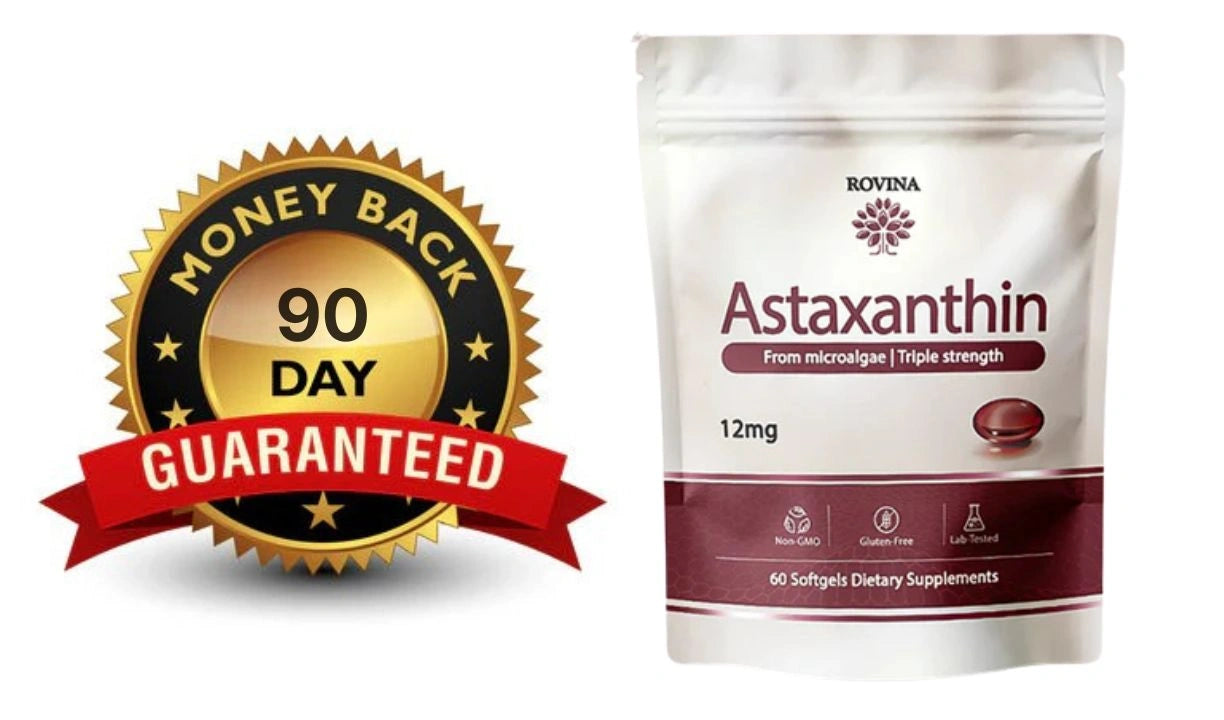
The Brand That Meets the Standard: Rovina Astaxanthin 12mg


Save 60%
Buy 1, Get 1 FREE
Most Popular

Save 67%
Buy 2, Get 2 FREE
Best Value

Save 70%
Buy 3, Get 3 FREE
What to Expect and When

Who This Is Most Relevant For

Zero Risk: The 90-Day Guarantee
A Final Word